When responding to a fire, even a few seconds can be critical. A fire that starts with a small spark can quickly develop into a serious incident, potentially resulting in loss of life and property.
In recent years, with the widespread adoption of electric vehicles and the increasing use of lithium-ion batteries in everyday life, high-temperature-resistant blankets have become an increasingly important part of fire safety.
These specialized blankets help reduce the fire's exposure to oxygen, limit the spread of flames, and protect surrounding areas from extreme heat by covering the affected area. However, not all fire blankets offer the same level of heat resistance. Therefore, choosing the right product requires careful consideration of the type of fire and the temperatures to which the blanket may be exposed.
What Is a High-Temperature Resistant Blanket?
A high-temperature resistant blanket is a fire safety product manufactured from specialized technical textiles and designed to limit the effects of fire in environments exposed to intense heat and flames.
The ability of the blanket's fabric to maintain its structure under high temperatures, withstand prolonged heat exposure, and preserve its physical integrity is particularly important.
For this reason, selecting a product based solely on its temperature rating is not sufficient.
For example, a product may have a continuous operating temperature resistance of 1500°C and a melting point of 2500°C. These two values represent different technical properties. The first indicates the temperature the material can withstand under operating conditions, while the second refers to the temperature at which the material reaches its melting point.
The Nivofire ALPHA Fire Limitation Blanket is a good example of this distinction. Manufactured from carbon-graphite fabric, the product has a continuous temperature resistance of 1500°C and a melting point of 2500°C. It is also designed for repeated use.
What Does a High-Temperature Resistant Blanket Do?
The temperature of a fire can significantly affect its surroundings within seconds. Whether it is a welding area exposed to flying sparks, an industrial workspace subjected to extreme heat, or a small fire that needs to be controlled, having the right equipment can turn a rapid response into an effective safety measure.
High-temperature-resistant blankets create a protective barrier against various hazards, ranging from hot surfaces to flying sparks.
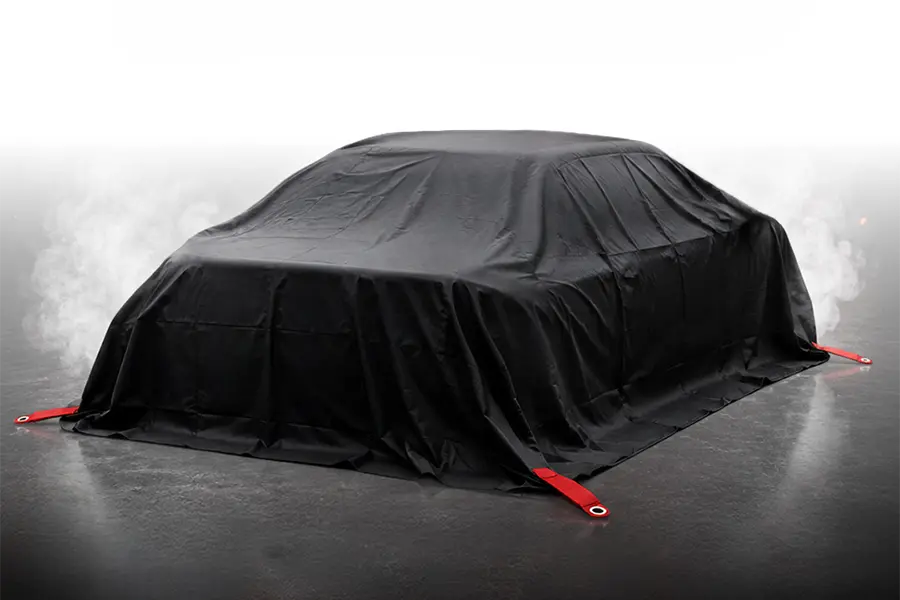
The primary function of a fire blanket is to help limit the impact of a fire by creating a physical barrier between the fire and its surroundings.
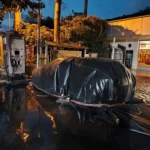
This approach becomes particularly important in electric vehicle fires. Thermal runaway in lithium-ion batteries can generate extremely high temperatures, making firefighting operations more complicated.
Therefore, a fire blanket should not be considered simply a cover placed over flames. Instead, it should be regarded as fire limitation equipment that helps isolate the affected area from its surroundings.
When used correctly, a heat-resistant fire blanket can provide the following benefits:
- Helps limit the spread of flames and extreme heat to surrounding areas.
- Supports efforts to keep the affected fire area under control.
- Helps reduce the risk of nearby vehicles and equipment being damaged by fire.
- Provides additional time for emergency response and evacuation.
- Certain reusable models may reduce operational costs in professional applications.
What Materials Are High-Temperature Resistant Blankets Made Of?
One of the most important factors determining the performance of a fire blanket is its fabric composition.
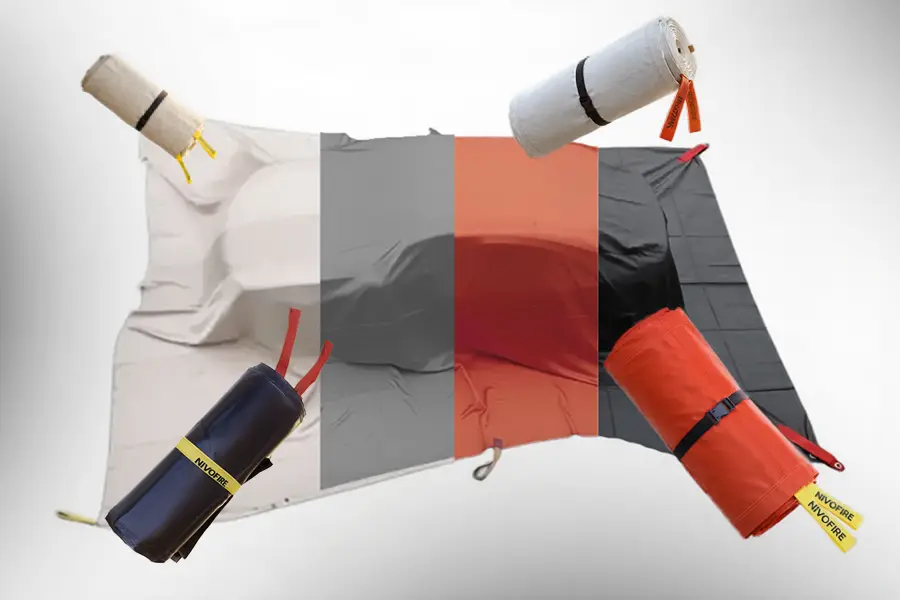
Different technical textiles provide varying levels of temperature resistance and are suitable for different operating conditions. Fiberglass, silica, and carbon-graphite fabrics are among the materials commonly used in these applications.
The table below illustrates how material selection affects performance across Nivofire's product range.
| Product | Fabric Type | Continuous Temperature Resistance | Melting Point / Maximum Temperature Resistance | Usage |
|---|---|---|---|---|
| ALPHA | Carbon-graphite | 1500°C | 2500°C melting point | Multiple use |
| BETA | 96% or higher silica | 1200°C | 1750°C maximum resistance | Reusable |
| GAMMA | Fiberglass | 800°C | 1600°C melting point | Single use |
How Does a High-Temperature Resistant Blanket Work?
At first glance, the operating principle of a fire blanket may seem straightforward: it is placed over the flames to prevent the fire from spreading.
However, its actual function involves much more than simply covering the fire.
Its structure, made from specially engineered heat-resistant fibers, helps restrict oxygen exposure while limiting the spread of intense heat to surrounding areas and covered surfaces.
Understanding how a fire blanket works therefore requires knowledge not only of its application but also of the engineering behind its heat-resistant materials.
To better understand how a fire blanket performs when exposed to flames, it is important to examine how its materials react to high temperatures and the mechanisms through which they contribute to fire limitation.
1. Reducing Oxygen Exposure
For a fire to continue burning, three elements must be present: fuel, heat, and oxygen.
When a fire blanket completely covers a burning surface, it restricts the supply of oxygen from the surrounding air to the affected area.
As oxygen availability decreases, sustaining the flames becomes more difficult, which can help bring the fire under control under suitable conditions.
2. Limiting Direct Heat Transfer
The purpose of a heat-resistant fire blanket is not limited to covering flames.
The high-temperature-resistant fibers used in its construction create a protective layer against intense heat.
This structure helps slow and restrict the direct transfer of heat through the blanket, reducing the risk of nearby materials being affected by extreme temperatures.
3. The Critical Role of Material Composition
The behavior of the fibers under heat exposure is one of the most important factors influencing fire blanket performance.
Specialized fibers such as carbon, silica, and ceramic materials can withstand different temperature levels depending on their technical properties and intended applications.
Therefore, it would be incorrect to assume that all products described as fire blankets can be used under the same temperature conditions.
Where Are High-Temperature-Resistant Blankets Used?
High temperature resistant blankets are not designed for just one type of fire scenario. Depending on the intended environment, their material composition, dimensions, temperature resistance, and reusability may vary.
Electric vehicles represent one of the most significant applications for these products.
In parking facilities, electric vehicle charging stations, service centers, and vehicle fleets, these blankets can be used as safety equipment to help limit the spread of fire to nearby vehicles or structures.
Other potential applications include forklifts, electric scooters, lithium-ion battery manufacturing and storage facilities, industrial plants, tunnels, airports, fuel stations, and vehicle transport ships.
Nivofire offers product groups specifically developed for several of these applications.
For example, the technical requirements of a fire limitation solution for an electric vehicle in a parking facility are different from those of a welding blanket used in a manufacturing environment. The first application may require extensive fire coverage and exceptional temperature resistance, while the second may focus primarily on protection against sparks and hot metal particles.
For this reason, a one-size-fits-all approach to fire blankets is not appropriate for professional applications.
What Should You Consider When Choosing a Heat-Resistant Blanket?
Choosing a heat-resistant blanket involves more than simply selecting a product capable of withstanding high temperatures.
The intended application, expected heat exposure, material composition, and duration of use should all be evaluated together.
The following table outlines the key criteria to consider when selecting a heat-resistant blanket.
| Selection Criteria | Why It Matters |
|---|---|
| Temperature Resistance | The blanket must be suitable for the temperatures expected in its operating environment. Continuous operating temperature and maximum temperature resistance may differ. |
| Material and Fiber Composition | Silica, carbon-graphite, fiberglass, and other heat-resistant fibers offer different performance characteristics under various operating conditions. |
| Intended Application | Welding, metal processing, casting, industrial furnaces, and fire protection may require different technical specifications. |
| Thermal Insulation Performance | It is important to evaluate not only resistance to direct flame contact but also how effectively the blanket limits heat transfer to the opposite side. |
| Flame and Spark Resistance | Resistance to flying sparks and direct flame exposure is particularly important in welding and metalworking applications. |
| Thickness and Weave Structure | Material thickness and weave density should be evaluated according to the intended use and expected thermal load. |
| Size and Coverage Area | The blanket must adequately cover the area requiring protection. An undersized blanket may not provide sufficient coverage. |
| Flexibility and Ease of Use | Easy deployment, folding, and adaptation to different surfaces can improve practical usability. |
| Technical Testing and Certifications | Manufacturer specifications, test results, and documentation of compliance with relevant standards should be considered. |
| Reusability | Whether the product is intended for single use or can be reused under appropriate conditions should influence purchasing decisions. |
| Manufacturer's Technical Specifications | Clear information regarding continuous temperature resistance, maximum temperature limits, exposure duration, and recommended applications supports reliable product selection. |
Using High-Temperature-Resistant Blankets in Industrial Environments
Fire risks in industrial facilities cannot be assessed based on a single hazard.
Welding operations, hot surfaces, electrical equipment, batteries, production lines, and areas containing flammable materials all present different risk profiles.
For this reason, the location where a fire blanket is stored is just as important as the product itself.
Emergency equipment should be kept in a secure, easily accessible location where personnel can reach it quickly when needed.
For larger blankets, procedures for transportation and deployment should also be planned in advance.
For other fire safety scenarios, Standard Fire Blankets can also be evaluated according to the intended application and required technical specifications.
Frequently Asked Questions
What Temperature Can a High-Temperature-Resistant Blanket Withstand?
The temperature resistance of a high temperature resistant blanket varies depending on the fabric used and the product's technical specifications.
Can a High-Temperature-Resistant Blanket Catch Fire?
High temperature resistant blankets are manufactured from specialized technical fabrics designed to withstand high temperatures and flame exposure. However, rather than assuming a product is completely fireproof, it is more appropriate to evaluate its stated temperature resistance and recommended operating conditions.
What Materials Are High-Temperature-Resistant Blankets Made Of?
Depending on the product, high-temperature-resistant blankets may be manufactured from technical textiles such as carbon-graphite, high-silica fabrics, and fiberglass.
Where Are High Temperature Resistant Blankets Used?
High-temperature-resistant blankets can be used in environments exposed to fire and extreme heat risks, including shopping malls, parking facilities, factories, warehouses, workshops, restaurants, commercial kitchens, energy facilities, construction sites, welding areas, vehicle service centers, and manufacturing plants.
Are Heat-Resistant Blankets and Fire Blankets the Same?
Although their applications may overlap, not all heat-resistant blankets have the same technical properties. The term "fire blanket" can be used as a general description, while "high temperature resistant blanket" typically refers to technical textile products specifically designed to withstand elevated temperatures.
Can a High Temperature Resistant Blanket Be Used to Extinguish a Fire?
A fire blanket can help limit a fire and reduce the spread of flames to surrounding areas. However, it should not be considered a standalone extinguishing solution for every type of fire. Electric vehicle and lithium-ion battery fires, in particular, require professional firefighting intervention. A fire blanket should be used as safety equipment that supports fire limitation efforts.
Which Heat-Resistant Blanket Is Suitable for Industrial Facilities?
No single product is suitable for every industrial application. The selection process should consider the source of the fire, expected temperature, exposure duration, blanket dimensions, fabric composition, mechanical strength, and reusability.
Can a High-Temperature-Resistant Blanket Be Reused?
Some high temperature resistant blankets are designed for repeated use, while others are intended for single-use applications.
What Features Should You Look for When Choosing a High-Temperature-Resistant Blanket?
Important factors include continuous operating temperature resistance, melting point or maximum temperature resistance, fabric composition, blanket dimensions, mechanical strength, duration of use, reusability, and relevant testing or technical standards.