

As electric vehicles become increasingly widespread, the risks faced by firefighters and emergency response teams are also changing. A new report published by the U.S. National Institute for Occupational Safety and Health (NIOSH) in September 2026 highlights the risks of thermal runaway and toxic exposure that lithium-ion batteries used in electric vehicles may pose following a crash.
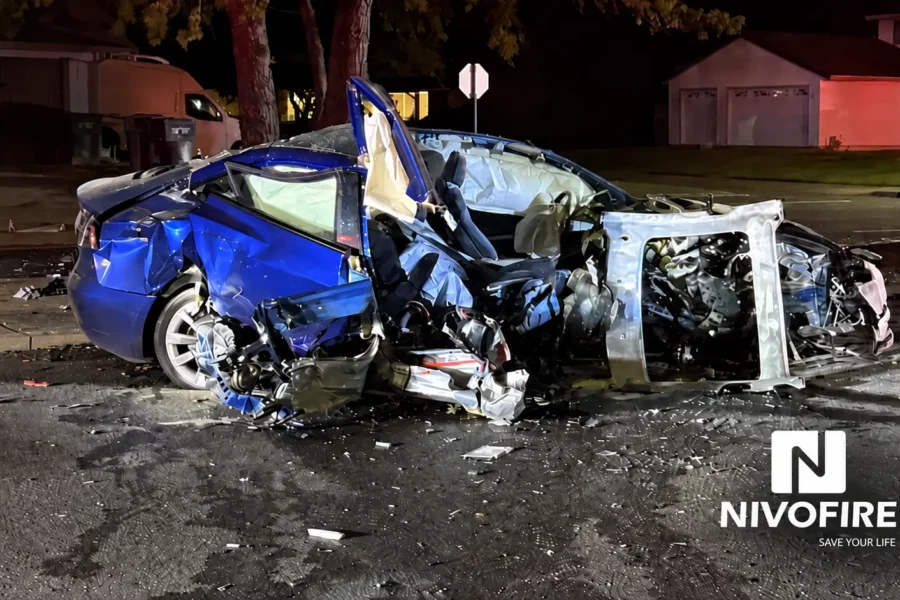
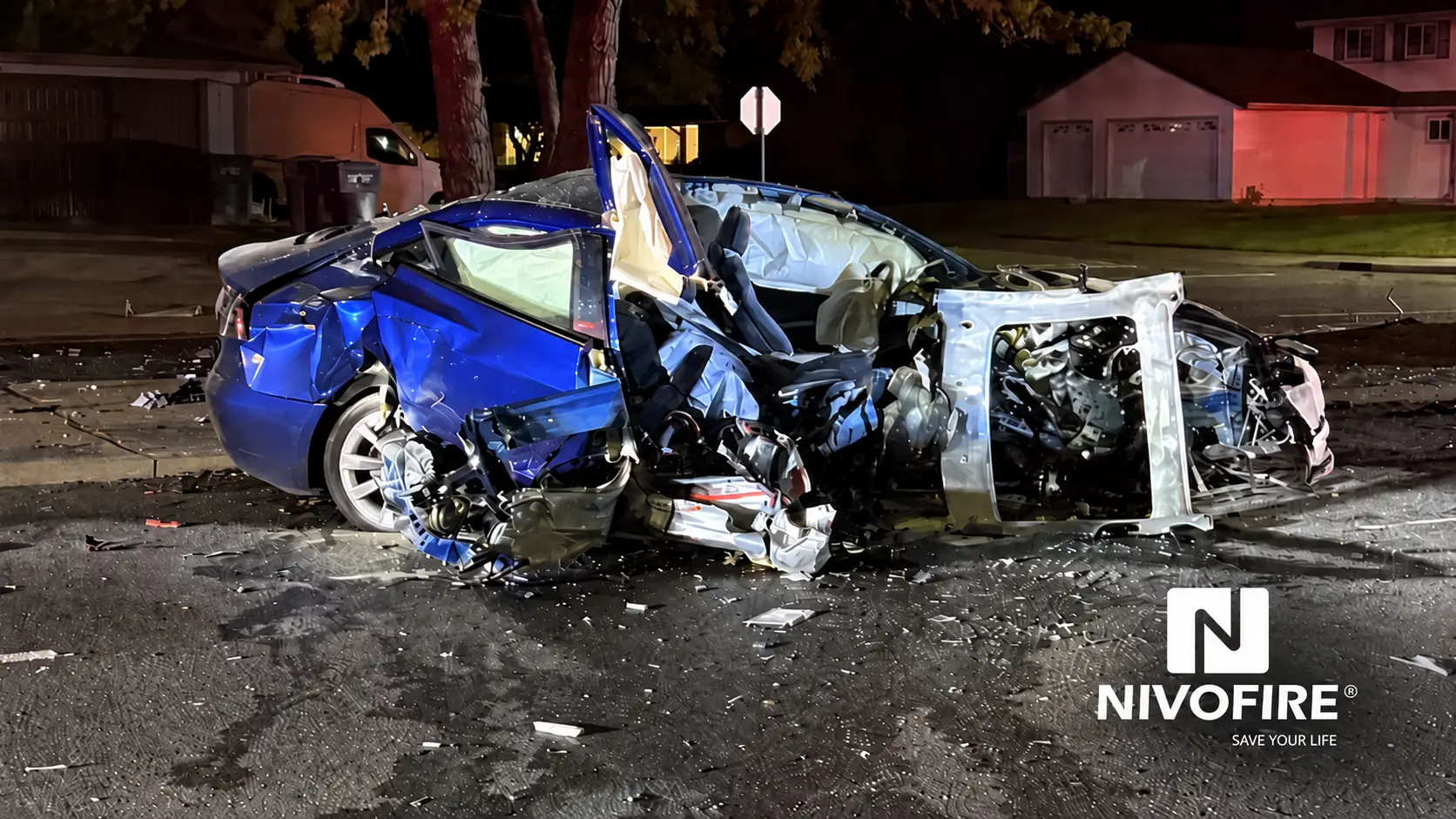
The incident examined in the report occurred in California on April 11, 2025. A Tesla Model 3 crashed into a tree, severely damaging its battery pack and scattering hundreds of battery cells across the roadway. Responding crews assessed the possibility of thermal runaway in the lithium-ion cells and classified the response as a Level 2 HAZMAT incident.
The Danger Does Not End When the Fire Is Extinguished
One of the most significant moments of the incident occurred when the main emergency response and cleanup operations were believed to be largely complete. As the damaged electric vehicle was being loaded onto a tow truck, the remaining section of the battery pack entered thermal runaway, producing a dense cloud of smoke.
At that point, some firefighters had already removed their personal protective equipment and stopped using their self-contained breathing apparatus. The smoke cloud then moved toward the crews. Some of the exposed personnel immediately reported experiencing a “metallic” and “sharp” taste in their mouths.
Five firefighters required medical attention due to serious health problems. When NIOSH conducted its investigation in the spring of 2026, four of the affected personnel had still not returned to duty because of ongoing health issues.
The report also notes that the white smoke generated during battery thermal runaway behaved differently from conventional fire smoke. According to personnel at the scene, rather than rising, the dense smoke travelled horizontally while remaining close to the ground.
What Is Thermal Runaway in Lithium-Ion Batteries?
Thermal runaway is a chain reaction that occurs when the heat generated by a battery cell increases uncontrollably and the cell is unable to dissipate that heat effectively.
According to the report, the process can release not only extreme heat but also flammable gases, toxic fumes and fine particles.
NIOSH states that smoke generated during thermal runaway events involving electric vehicles and lithium-ion batteries may contain a wide range of chemical substances, including metals, polycyclic aromatic hydrocarbons, acid gases and fluoride-containing particles.
Because no environmental samples were collected during the incident, it was not possible to determine exactly which substances the firefighters were exposed to or the concentrations involved.
Long-Term Health Effects Were Observed in Firefighters
Personnel who were exposed to the smoke cloud without respiratory protection initially experienced symptoms including a metallic taste, irritation and burning sensations in the throat and eyes, coughing, nausea and dizziness.
In the following weeks, some personnel reported shortness of breath during physical exertion, coughing, fatigue, heart palpitations and an elevated heart rate. Four firefighters developed new-onset high blood pressure within approximately one month.
In the months that followed, concentration difficulties, irritability and various mood changes were also reported among some personnel.
However, NIOSH specifically emphasizes that the typical health effects associated with exposure to lithium-ion battery smoke cannot be conclusively determined based on a case group consisting of only five individuals.
Preparing for New Risks in Electric Vehicle Fires
The NIOSH report demonstrates that the hazards associated with electric vehicle fires are not limited to visible flames.
Damaged lithium-ion batteries may re-enter thermal runaway during later stages of an emergency response or while the vehicle is being transported. Toxic gases and particles may also create a significant exposure risk even when no active fire is visible.
As the number of electric vehicles on the road continues to grow, fire safety strategies must also be updated to address these emerging risks.
In particular, clearly defined procedures regarding when respiratory protection can safely be discontinued, how safe zones should be established and how damaged batteries should be transported are critically important for protecting emergency response personnel.
Source: NIOSH
