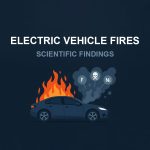
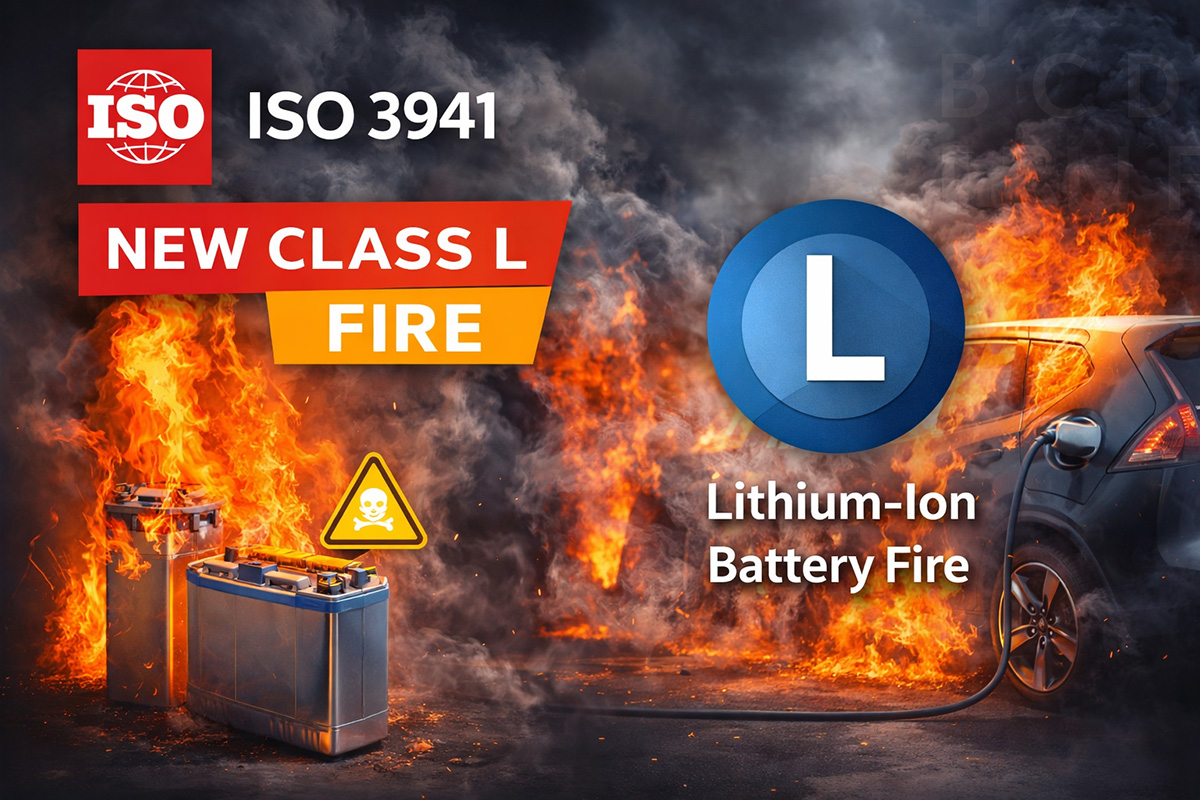
A New Fire Class Officially Introduced: Class L Lithium-Ion Battery Fires
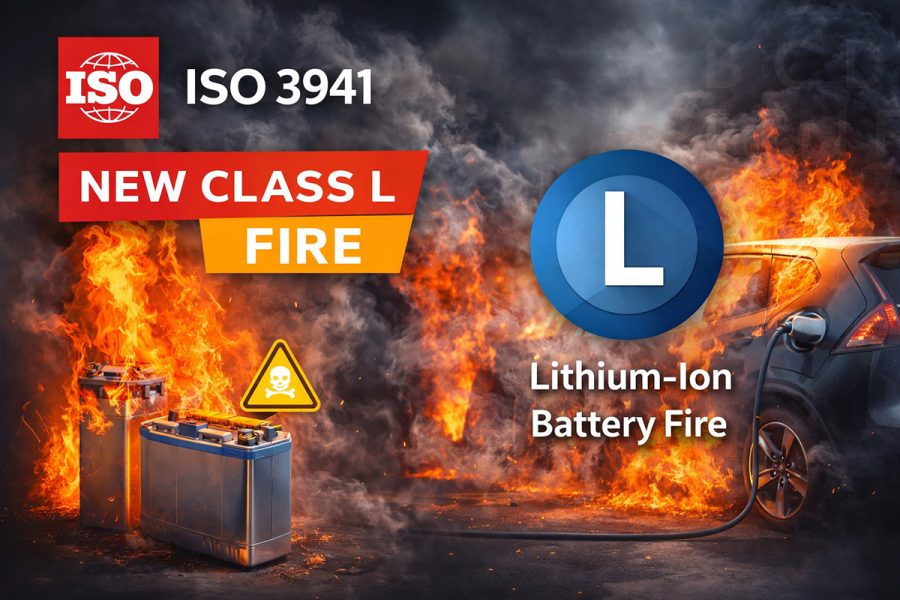
Fire classifications are defined under the international standard ISO 3941. Until now, ISO 3941:2007 included Class A, B, C, D, E, and F fires. However, the rapid adoption of vehicles, devices, and technologies powered by lithium-ion batteries has revealed that existing classifications no longer fully address these emerging risks. As a result, ISO 3941 was updated in January 2026, introducing a new fire category: Class L Fires.
What Is a Class L Fire?
According to ISO 3941:2026, a Class L fire is defined as:
“Fire involving lithium-ion cells and batteries, where no lithium metal is present.”
In other words, Class L covers fires involving lithium-ion cells and batteries that do not contain lithium metal.
The standard also includes an important note:
“Class L fires are electrochemical fires that, by comparison to most Class A, B, C, D, and F fires, have a greater energy density that can result in a faster growth rate when released.”
This means that due to their electrochemical nature, Class L fires have significantly higher energy density than conventional fire classes, which can lead to much faster fire development.
Growing Risk of Battery-Related Fires
The number of electric vehicles and devices powered by lithium-ion batteries continues to increase rapidly. As battery size and capacity grow, so does the amount of energy released in the event of a fire. Consequently, fires involving high-capacity lithium-ion batteries in electric vehicles represent some of the highest-energy fire scenarios encountered today.
In such EV fires, traditional suppression methods such as water, foam, or dry chemical extinguishers are often insufficient.
Effective Intervention for Class L Fires: Fire Blankets
In electric vehicle fires classified as Class L, rapid limitation is critical to minimizing extreme heat, dense smoke, and toxic gas release.
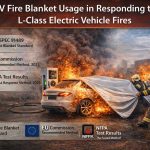
Fire blankets are widely recognized as a fast and effective intervention method for battery fires. A report published by the European Commission in 2025 recommends fire blankets as the primary intervention tool for battery fires. In addition, tests conducted by NFPA in the United States in October 2025 demonstrated that fire blankets are the fastest method to bring battery fires under control.
Today, the use of fire blankets in lithium-ion battery fires is globally accepted, and in some U.S. states, fire blankets for electric vehicle fires have already become mandatory.
Nivofire Electric Vehicle Fire Blankets
Nivofire has developed electric vehicle fire blankets manufactured from special high-temperature-resistant fabrics specifically designed for Class L fires. Nivofire EV fire blankets help:
- Rapidly contain and control battery fires,
- Reduce dense smoke and toxic gas emissions, minimizing environmental impact,
- Enhance protection of life and property.
Class L fires, officially defined by ISO 3941:2026, mark a new era in electric vehicle safety. Being prepared for this emerging risk category with the right equipment is no longer optional; it is essential.